Financial data screen displaying stock market charts and trading data
NASDAQ: IVF — Fertility Healthcare

This Fertility Company Just Crossed an Inflection Point — and a Wall Street Analyst Just Set a $4 Price Target.

Operationally profitable clinic portfolio. Closed on the acquisition of a fourth clinic. A $9 million annualized revenue run rate. A CEO who just told shareholders the company is in the strongest position in its history. And now, a Maxim Group analyst has upgraded the stock to Buy with a $4.00 target — more than 3x the current price. And at the most recent State of the Union, the President made fertility access and drug affordability a national priority. INVO Fertility (NASDAQ: IVF) has quietly moved from restructuring to execution — and the market hasn't caught up yet.

Read the Full Thesis

Why This Matters

Why This Deserves Your Attention Right Now

Here's what caught our attention — and why we think this deserves a serious look right now:

  • Operationally Profitable Clinic Portfolio — Contributing positively to cash flow, bringing the overall Company closer to break-even. In a sector where many growth-stage companies burn cash, having operational profitability, at the clinic level across multiple locations is a real milestone.
  • 4th Clinic Acquired (Indianapolis) — The acquisition of a fourth fertility clinic in Indianapolis recently closed. This isn't a press release about "exploring opportunities." It's a deal that's now done.
  • $9 Million Annualized Revenue Run Rate — Before organic growth initiatives kick in for 2026. That's the baseline. The company expects to grow from here through additional acquisitions and increased revenue at existing clinics.
  • Strongest Balance Sheet in 3+ Years — The CEO said it directly: "Our balance sheet is the strongest it has been in more than three years." That means optionality — capital for acquisitions, organic investment, and navigating volatility.
  • FDA-Cleared, Patented Technology — INVOcell isn't experimental. It's an FDA-cleared, patented medical device already deployed in clinics and generating revenue — part of a broader technology strategy INVO is deploying across its network.
  • NASDAQ Listed — Institutional accessibility, regulatory oversight, and liquidity that micro-cap OTC stocks can't offer. This is a real listing on a real exchange.
  • Robust Acquisition Pipeline — Multiple targets under active evaluation. Active discussions underway. The deal flow isn't hypothetical — it's live.
  • Federal Policy Tailwind — Recent executive actions reinforcing federal support for IVF access. Policy isn't the central thesis here — execution is. But a supportive policy environment is a meaningful accelerant.

"There's something happening here that most investors haven't pieced together. A company that spent years restructuring just quietly moved to a growth and expansion phase from a strengthened position — and the CEO is telling you growth may accelerate. Below, we'll break down exactly what's changed and why it matters."

Market Context

The Market — Bigger Than Most Investors Realize

Let's set the stage, because the context matters.

When you hear "fertility," you might think niche. Boutique clinics in big cities. Wealthy couples. A small, specialized corner of healthcare.

The data tells a different story.

One in six adults globally experiences infertility. That's not a rounding error — that's hundreds of millions of people. And the number is growing. Couples are starting families later. Environmental and lifestyle factors are playing a role. Fertility treatment has moved from a whispered struggle to a mainstream healthcare conversation.

The market reflects it. Analysts project the global fertility market will reach $43 billion by 2030, growing at an 8.5% compound annual rate.

$43B
Projected Market by 2030
8.5%
Compound Annual Growth
1 in 6
Adults Affected Globally

But here's what the headline numbers don't reveal: access remains the central problem. The average IVF cycle costs $15,000–$25,000. Most patients need multiple cycles. Insurance coverage is inconsistent. Treatment is concentrated in major metros. The gap between people who need help and people who can get it is still enormous.

That gap is the opportunity. And for the company we're looking at today, it's not theoretical — they're already building into it.

The Catalyst

A CEO Tells Shareholders the Thesis Is Playing Out

In February 2026, INVO Fertility CEO Steve Shum issued a shareholder letter. It wasn't the typical CEO platitudes about "exciting opportunities ahead." It was specific. It was data-backed. And it painted a picture of a company that has crossed a critical threshold.

Here's the line that jumped off the page:

"We believe our company is in the strongest fundamental position in its history."
— Steve Shum, CEO, February 2026 Shareholder Letter

That's a bold statement. But what makes it credible isn't the words — it's the operational data behind them.

Shum outlined a company that now has an operationally profitable clinic portfolio of four clinics, including the recent acquisition in Indiana. An annualized revenue run rate of approximately $9 million. And the strongest balance sheet in more than three years.

This is the "catalyst" we're focused on — not a policy announcement or a pipeline promise, but a company reporting that its strategy is working and its fundamentals have never been stronger.

And the CEO went further. On the subject of future growth, he was specific:

"Our expectation of growth is not speculative — it is supported by the visibility we have into our acquisition pipeline, the performance trends within our clinics, and the broader demand dynamics within the fertility care market."
— Steve Shum, CEO, February 2026 Shareholder Letter

That's not a hope. That's a CEO telling you he can see the pipeline, he can see the trends, and he's confident in the trajectory.

On top of the company-specific execution, there's a policy tailwind worth noting. Recent federal executive actions have reinforced support for IVF access — increasing awareness, supporting affordability, and signaling that fertility treatment is a policy priority. That's not the central thesis here, but it's a meaningful accelerant for a company already executing.

Most investors are still pricing INVO as a restructuring story. The CEO just told you it's a growth story now.

Third-Party Validation

Wall Street Is Starting to Notice

The CEO made the case. Now a Wall Street analyst is backing it up with numbers.

In February 2026, Maxim Group LLC — a full-service investment bank and FINRA-registered broker-dealer — published a research report on INVO Fertility. The headline:

Research Report Summary
Firm
Maxim Group LLC
Analyst
Jason McCarthy, Ph.D.
Date
February 2026
Rating
Buy (upgraded from Hold)
12-Month Price Target
$4.00

At the time of the upgrade, INVO shares were trading around $1. That's a target implying more than 3x upside from current levels.

Let that sit for a moment. A credentialed Wall Street analyst looked at the same execution data we just walked through — the operationally profitable clinic portfolio, the acquisition strategy, the technology platform, the balance sheet improvement — and concluded the stock is meaningfully undervalued.

"We are upgrading IVF shares to Buy, from Hold, and establishing a 12-month price target of $4.00 based on a combination of organic and inorganic revenue growth within the fertility business."
— Jason McCarthy, Ph.D., Maxim Group

The analyst's thesis aligns with the company's own narrative: execution on the clinic acquisition strategy, revenue growth driven by expanding the network and deploying technology across it, and a path toward profitability that's increasingly visible. The valuation uses multiple established methodologies — discounted cash flow, discounted earnings, and sum-of-parts analysis — each arriving at a similar conclusion.

"With lean operations and a focus on profitable clinics, we believe the company has a relatively quick path to breakeven."
— Jason McCarthy, Ph.D., Maxim Group

Here's what matters for investors: this isn't a speculative "could be" story anymore. The company is executing. The CEO is telling you the fundamentals have never been stronger. And now, an independent Wall Street firm has put a price target on it that implies significant upside from current levels.

The CEO made the case for the company. The analyst made the case for the stock. Together, they paint a picture of a company that may be in the early innings of a meaningful re-rating.

Important disclosure: Maxim Group has a banking relationship with INVO Fertility. We note this transparently because it matters. FINRA regulations require separation between a firm's investment banking and research divisions. The analyst's conclusions are his own, based on his independent analysis. Investors should consider this relationship as part of their own due diligence.

Political Tailwinds

The President Just Made This a National Priority

The CEO made the case. The analyst backed it up with a model. And then the President of the United States reinforced the thesis on national television.

At the most recent State of the Union address, President Trump spoke directly about fertility access and reducing drug prices — framing IVF affordability as a stated national priority. This wasn't a footnote in a policy document. It was a primetime moment in the most-watched speech of the year.

Watch the moment:

State of the Union Address — February 2026

This matters for INVO Fertility specifically because of what the Maxim analyst had already flagged in the research report:

"We believe macroeconomic trends supporting fertility treatment manifesting in executive orders and policy proposals aimed at improving the cost of, and access to IVF provide a favorable environment for INVO's strategy."
— Maxim Group Research

That was written before the State of the Union. The tailwind the analyst identified just got a presidential endorsement.

And INVOcell's positioning within this shift is hard to ignore. At roughly 50% the cost of traditional IVF, it directly addresses the affordability barrier that the President is asking the country to solve. When the policy direction is "expand access and reduce costs" — a technology that already does both becomes more relevant, not less.

The macro isn't the core thesis. The execution is. But when the political environment actively reinforces your business model, that's a tailwind worth noting.

4
Clinic Portfolio
4th
Acquisition Closed
~$9M
Revenue Run Rate
3+
Yrs Strongest Balance Sheet

Company Overview

INVO Fertility — From Restructuring to Execution

Let's talk about what INVO Fertility actually is — and more importantly, what it's become.

INVO Fertility (NASDAQ: IVF) is a healthcare fertility company with two distinct value drivers:

Engine One: Clinic Acquisition & Operations Platform

A strategy for acquiring, operating, and growing fertility clinics. Not the way private equity does it — INVO offers a public company partnership model that's proving attractive to independent clinic founders. An operationally profitable clinic portfolio of four clinics tell you this is working.

Engine Two: Proprietary Technology (INVOcell)

A patented, FDA-cleared medical device that offers an innovative approach to fertility treatment — one of several cutting-edge technologies INVO is deploying across its growing clinic network.

But here's what makes the current moment different from six months ago, a year ago, or two years ago.

"INVO Fertility has transitioned from a company focused primarily on recovery and restructuring to one that is firmly focused on expansion, execution, and long-term growth."
— Steve Shum, CEO

That transition is the story. A company that spent years stabilizing — restructuring its balance sheet, building operational infrastructure, proving the clinic model works — has now crossed to the other side. The restructuring is done. The foundation is built. The company is executing.

And both engines are running.

Platform Proof

The Clinic Platform — Now With Real Proof

Here's where this story diverges from anything you may have heard before.

Six months ago, the clinic acquisition strategy was a thesis. Today, it's a track record. INVO now operates four fertility clinics, creating positive operational cash flow. The fourth clinic in Indianapolis was just recently acquired.

Let me say that again, because it matters: operationally profitable clinic portfolio of four clinics. In healthcare services, achieving operational profitability at the clinic level is a critical milestone. Doing it across multiple sites demonstrates that the model works — not as a one-off, but as a repeatable system.

The combined annualized revenue run rate of those clinics is approximately $9 million, inclusive of Indianapolis. And that's the baseline — before organic growth initiatives the company expects to pursue in 2026.

Why Clinics Want to Partner with INVO

The fertility clinic market is fragmented. Over 60% of clinics remain independently owned — small practices built by physician-founders who've spent decades serving their communities.

Many of those founders are approaching a crossroads. They're weighing their options. And historically, the primary option has been private equity.

But INVO is offering something structurally different: a public company partnership.

Private Equity Approach INVO's Public Company Model
Defined investment horizon (5-7 years) Public company partnership structure
Founders transition to employee roles, typically with little to no input Founders are able to focus on practicing medicine while their administrative burden is alleviated
Limited ongoing financial participation Equity participation in public company growth and potential for future wealth creation
Portfolio optimization focus Clinical quality and patient care focus

Clinic founders who partner with INVO receive equity in a NASDAQ-listed company. They continue doing what they do best — practicing medicine and caring for patients. And they participate in the company's long-term growth.

For founders who care about legacy and clinical independence, that structure offers an alternative. Private equity typically does not offer public equity participation. They can't offer indefinite hold periods. They can't offer the same alignment of interests.

And critically, the shareholder letter confirms this positioning is working. The CEO noted that INVO's growing track record as an owner-operator has enhanced its credibility in the market. Sellers increasingly want partners who understand both the clinical and operational sides of fertility care.

The acquisition pipeline is robust. Multiple targets are under active evaluation. The deal flow is real.

When a fertility clinic founder is weighing options, INVO isn't just competing on price. They're competing on structure. And for founders who care about what happens to their practice, their patients, and their team after a transaction — the structure matters.

PE firms see fertility clinics as assets to acquire, optimize, and exit. INVO sees them as practices to partner with and grow over time. That's not a subtle difference. It's a fundamentally different relationship — and it's why clinic founders are taking the call.

Proprietary Technology

INVOcell and Cutting-Edge Fertility Technology

INVO doesn't just acquire clinics. It strives to integrate innovative technology to them.

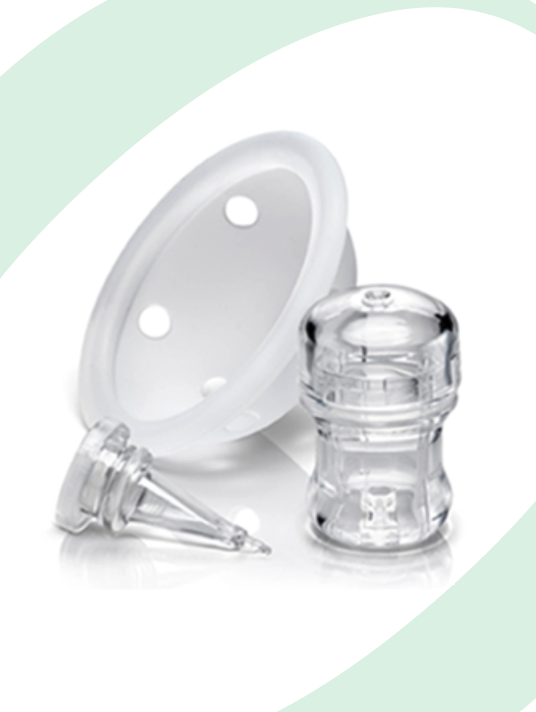
The flagship is INVOcell — a patented, FDA-cleared medical device that enables intravaginal incubation, allowing fertilization and embryo development to take place inside the woman's own body rather than exclusively in a laboratory.

INVOcell medical device - FDA-cleared intravaginal incubation technology
Traditional IVF INVOcell Approach
Laboratory incubation Intravaginal incubation
External embryo development Patient participates in the process
Established protocol Comparable success rates
Standard clinic experience More connected patient experience
Traditional lab requirements Streamlined laboratory process

For patients: A treatment option where patients feel more connected to the fertilization process, with comparable success rates to traditional IVF. For certain patients, that emotional connection is significant.

For clinics: An additional treatment option that complements existing services. The streamlined lab process may also create operational efficiencies and help clinics serve more patients.

FDA-Cleared • Patented • Commercial — INVOcell is a proven, regulated medical device already in clinical use.

But INVOcell is just one piece of the technology strategy. As INVO grows its clinic network, the company is focused on investing in proven technologies and cutting-edge treatment approaches that can be deployed across the platform — improving patient outcomes, expanding treatment options, and creating operational advantages that independent clinics couldn't access on their own.

It's this combination of operational scale and technology access that makes the partnership model attractive to clinic founders considering their next chapter.

Want to stay informed as INVO Fertility's execution story unfolds?

Get Updates on NASDAQ: IVF

The Bigger Picture

How Platform + Technology + Execution Compound

Here's the insight most investors miss: the two engines aren't just running in parallel. They're designed to reinforce each other.

Step 1
Acquire Clinic
3 done, 4th closing
Step 2
Deploy Technology
FDA-cleared, in use
Step 3
Grow Patient Volume
Organic growth underway
Step 4
Generate Revenue
$9M run rate
Step 5
Strengthen Balance Sheet
Strongest in 3+ years
Step 6
Fund Next Acquisition
Robust pipeline active
↻ The cycle repeats — each turn stronger than the last

This is the strategic combination in action. The platform creates deployment opportunities for technology. Technology access makes partnerships more attractive. Execution builds credibility. Credibility attracts more deals.

And here's what's different about this story today: the combination isn't theoretical anymore.

Four clinics, creating positive operational cash flow. Proprietary technologies, like INVOcell, deployed and generating revenue. The fourth acquisition recently closed. A pipeline with multiple active targets. A balance sheet that supports continued deal-making.

The strategic combination is already turning. The question is no longer "will this work?" — it's "how fast does it scale?"

By the Numbers

Quantifying What's Already Happening

The Company (Execution Proof)
  • 4 clinic portfolio — contributing positively to cash flow
  • 4th clinic (Indianapolis) — recently closed acquisition
  • ~$9M annualized revenue run rate — before organic growth
  • Strongest balance sheet in 3+ years — optionality for growth
  • January 2026 warrant inducement — fixed $1.59 price, dilution clarity
  • Robust acquisition pipeline — multiple targets under active evaluation
The Market (Demand Context)
  • $43 billion projected global fertility market by 2030
  • 8.5% CAGR — sustained structural growth
  • 1 in 6 adults affected by infertility globally
  • 60%+ of clinics still independently owned — consolidation runway
The Positioning
  • NASDAQ listed — institutional accessibility
  • FDA-cleared technology — regulatory validation
  • Patented IP — competitive protection
  • Public company partnership model — differentiated acquisition approach

"A company with an operationally profitable clinic portfolio of 4 clinics, one recently acquired, $9M in revenue, the strongest balance sheet in years, and a CEO who says growth is accelerating. Operating in a $43B market where 60%+ of clinics are still independently owned. That's the setup."

What to Watch

Catalysts — What Could Move This Forward

Here's what we're watching:

Q1 2026

Indianapolis Acquisition Closed

The fourth clinic acquisition recently closed. Now that it is complete, it validates the pipeline, expands the network, and adds to revenue immediately and provides a business catalyst.

2026

Organic Revenue Growth

With $9M as the baseline, the company has stated its intention to grow revenue organically through patient volume increases, marketing investment, physician recruitment, and added services. Organic growth above the baseline demonstrates the model's scalability.

Ongoing

Additional Acquisitions

The pipeline is described as robust with multiple active targets. Each new acquisition announcement validates the platform, expands the network, and builds the compounding effect. Watch for deal flow.

Tailwind

Federal Policy Support

Executive actions supporting IVF access create a favorable backdrop. While the timing and magnitude of policy impact are uncertain, a supportive environment for fertility treatment benefits providers focused on accessible care. This is a tailwind, not a catalyst we're banking on — but it's real.

Medium-Term

Strategic Optionality

A growing platform with proprietary technology, multiple operationally profitable clinics, and a NASDAQ listing creates options. Larger healthcare partnerships. Distribution agreements. Or simply continued organic growth and network expansion. Multiple paths forward.

"In small-cap markets, the window for building positions in under-recognized names is, by definition, limited. We believe INVO is in that window right now — a company whose fundamentals have inflected but whose market recognition hasn't caught up."

Investment Thesis

The Thesis — Execution Changes Everything

Let's distill this to the core points.

The Inflection Is Real

This isn't a forward-looking promise. An operationally profitable clinic portfolio of four clinics, including the recent Indiana acquisition, a $9M revenue run rate, and the strongest balance sheet in three-plus years. The CEO calls it the strongest fundamental position in company history. The execution proof is on the table.

The Market Is Massive and Growing

$43 billion globally by 2030, 8.5% CAGR, driven by demographics that aren't reversing. One in six adults face infertility. The gap between demand and accessible treatment remains enormous. This is secular, structural growth.

The Technology Is Proven

INVOcell is FDA-cleared, patented, and commercially generating revenue — and it's part of a broader strategy to deploy cutting-edge fertility technologies across the clinic network. As the platform scales, so does the technology reach.

The Platform Is Differentiated

The public company partnership model offers clinic founders equity participation in a NASDAQ-listed company, long-term alignment, and clinical independence. That's structurally different from private equity — and it's attracting deal flow.

The Strategic Combination Compounds

Technology supports the platform. The platform expands technology reach. Execution builds credibility. Credibility attracts more deals. The cycle is already turning. Each acquisition makes the next one easier.

The bottom line:

INVO Fertility has crossed from restructuring to execution. The company has an operationally profitable clinic portfolio of four clinics, a growing network, proprietary technology, and a CEO who says growth is accelerating based on what he can see in the pipeline and the performance trends. Most investors are still pricing this as a turnaround story. The CEO is telling you it's a growth story now.

That gap between perception and reality is where opportunities live in small-cap markets.

Risk Assessment

What Could Go Wrong — Honest Risk Assessment

No investment thesis is complete without acknowledging what could go wrong. Here's what to consider:

Execution Risk

The strategy requires continued successful acquisitions and integration. Scaling from 3-4 clinics to a larger network is a different challenge than getting to profitability. The model is working at current size — demonstrating that it scales is the next test.

Small-Cap Volatility

This is a small-cap stock. Price swings are inherent. Liquidity, while better than OTC, is still limited compared to large caps. Position sizing should reflect this reality.

Capital Requirements

Growth requires capital. Additional acquisitions may require additional funding. The balance sheet is the strongest in years — but continued expansion will require ongoing capital management. How future funding is raised, and at what terms, matters for existing shareholders.

Competitive Response

Success attracts attention. Larger players could enter the space. PE firms could adjust their models. First-mover advantage in the public company partnership model is real but not permanent.

Integration Complexity

Each clinic has its own culture, patient base, and operational dynamics. Integrating acquisitions while maintaining quality and clinical independence is challenging. The company's track record is encouraging but still early.

Policy Uncertainty

Federal policy support for IVF is a tailwind, not a guarantee. Political priorities shift. Mandates that seem likely can get delayed or modified. We're not building the thesis on policy — but it's worth monitoring.

This is not a bond substitute. This is not a "safe" investment. This is a small-cap growth opportunity with asymmetric risk/reward characteristics — a company that appears to have inflected but hasn't yet been broadly recognized. The execution proof is compelling. The catalysts are identifiable. The risks are real. Position accordingly.

Get Updates on INVO Fertility (NASDAQ: IVF)

Catalyst alerts, SEC filing summaries, and research updates as this story develops. We'll keep you informed as the execution continues.

The Bigger Picture

Step back from the numbers for a moment.

Behind all the revenue figures and acquisition milestones is a simple reality: millions of people want to start families and can't access the care they need.

The fertility market isn't an abstraction. It's couples who've been trying for years. It's the financial burden of treatment that insurance won't cover. It's the geographic lottery of whether you happen to live near a clinic that can help.

INVO Fertility is working to change that equation — making treatment more accessible, more available, and more connected to the patients it serves.

A company that was restructuring a year ago now has an operationally profitable clinic portfolio, which it's growing. That's not just an investment thesis. That's execution with a mission behind it.

For investors looking for a company where the fundamentals have quietly inflected, the growth trajectory is visible, and the market hasn't caught up yet — this one deserves a serious look.